
The Real Cost of Choosing the Wrong Denver E-Commerce Development Agency
A denver e-commerce development agency can be the difference between an online store that quietly loses sales and one that consistently grows revenue. But with 49 ranked agencies in Denver alone as of 2026, and hundreds more across Colorado, picking the right partner is not simple.
Here is a quick overview to help you decide:
| What you need | What to look for |
|---|---|
| New online store | Agency with e-commerce specialization, not a generalist web shop |
| Platform migration | Proven migration experience with SEO continuity |
| Better conversions | Track record of CRO and mobile-first builds |
| Ongoing support | Post-launch maintenance and training included |
| Local market fit | Agency familiar with Colorado tax rules and consumer behavior |
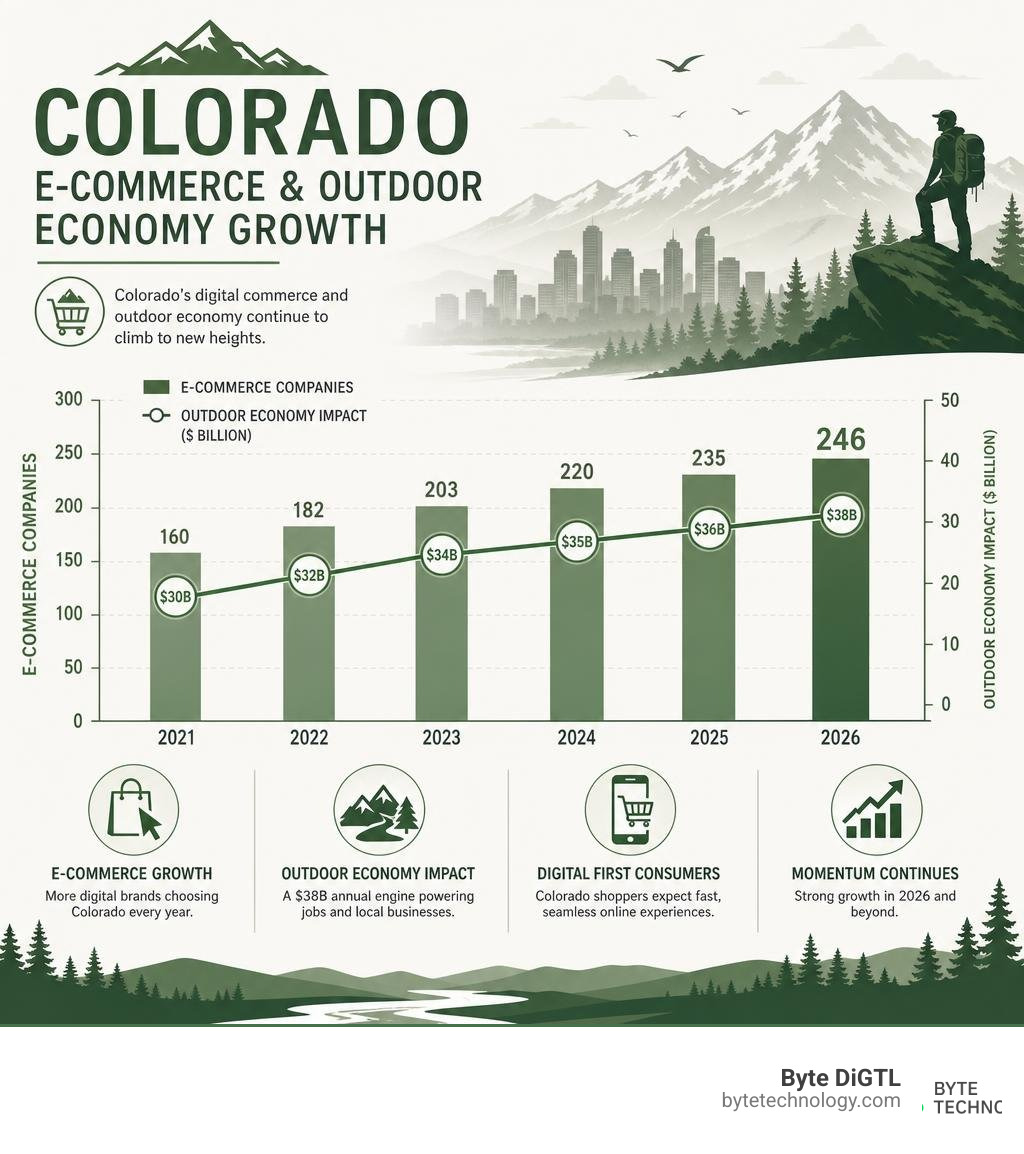
Denver’s tech ecosystem is growing fast. Colorado is home to over 246 e-commerce companies, including Ibotta with 830 employees and major players like Block and Klaviyo operating locally. That growth creates real opportunity for small businesses, but it also raises the bar. Generic, template-built stores rarely compete in a market this active.
As one industry insight puts it: “Developing a unique brand identity and leveraging localized marketing tactics are essential, since generic e-commerce solutions rarely perform well in Denver.”
Over 60% of online purchases now happen on mobile devices. More than 81% of shoppers research products online before buying in a physical store. Your website is not just a storefront. It is your hardest-working salesperson.
This guide walks you through everything you need to know to find the right e-commerce development partner in Denver, from platform selection to post-launch support.
BYTE DiGTL brings over a decade of experience in scalable front-end and back-end architecture, technical SEO, and conversion-driven web development, including work with e-commerce brands looking for a denver e-commerce development agency that thinks beyond templates. This guide reflects that hands-on expertise.
Why Colorado is a Thriving Hub for E-Commerce Innovation
Colorado is no longer just a haven for outdoor enthusiasts, it has become one of the most dynamic technology hubs in the United States. Ranking as the fourth-largest tech economy outside of the coastal states, the Front Range corridor hosts over 6,000 technology enterprises. This concentration of innovation directly benefits local e-commerce brands, which can leverage a massive pool of specialized digital talent.
A major driver behind this digital growth is the state’s massive outdoor recreation economy. Generating $38 billion annually and supporting over 229,000 jobs, the outdoor sector has birthed hundreds of brands that require highly specialized digital storefronts. From ski and snowboard retailers with complex rental calendar integrations to technical apparel brands selling worldwide, Colorado businesses demand websites that match their physical ambitions.
Additionally, Colorado’s unique lifestyle has fostered a booming craft beverage and wellness culture. Denver has one of the highest per-capita concentrations of craft breweries in the country, with more than 400 breweries operating statewide. As these brands expand from physical taprooms into direct-to-consumer sales, merchandise subscriptions, and online beer clubs, they require advanced web solutions that can handle age verification, localized delivery logistics, and recurring subscription billing.
With 246 active top Colorado e-commerce companies continuously pushing the envelope, local consumer expectations are incredibly high. Colorado shoppers are tech-savvy, environmentally conscious, and highly design-aware. They expect rapid page speeds, intuitive navigation, and flawless mobile experiences whether they are ordering gear from a ski lift or buying local coffee from their home in Littleton.
To stand out in this competitive market, brands must work with a team that offers specialized Denver e-commerce development services rather than relying on generic, out-of-the-box templates. Local market knowledge, combined with high-level engineering, is key to capturing the attention of Colorado consumers.
Choosing the Right Denver E-Commerce Development Agency for Your Brand
Selecting an agency is one of the most critical decisions your business will make. The wrong choice can lead to missed launch deadlines, broken checkout funnels, and lost organic search rankings. When vetting a potential partner, the first step is to filter out the generalists.
Building a basic informational website is relatively simple, but constructing an e-commerce engine that can handle hundreds of concurrent transactions, process real-time shipping rates, and integrate with complex inventory management systems requires specialized expertise. You need a team that lives and breathes e-commerce.
One of the biggest risks when hiring a developer is the single point of failure risk. Relying on a solo freelancer can leave your business vulnerable if they become unavailable, fall ill, or hit a technical roadblock they cannot solve. A structured agency model provides a redundant system of developers, project managers, and quality assurance testers to ensure your project stays on schedule and never goes dark.
When comparing providers, look closely at their billing models and project timelines. High-quality custom e-commerce builds typically take 8 to 12 weeks from discovery to launch. Agencies that promise a fully custom build in a few days are often installing pre-made templates with minor visual tweaks. A transparent agency will outline clear milestones and use standard payment structures, such as a 50/25/25 billing model, which splits payments across the project kickoff, a mid-point milestone, and final completion.
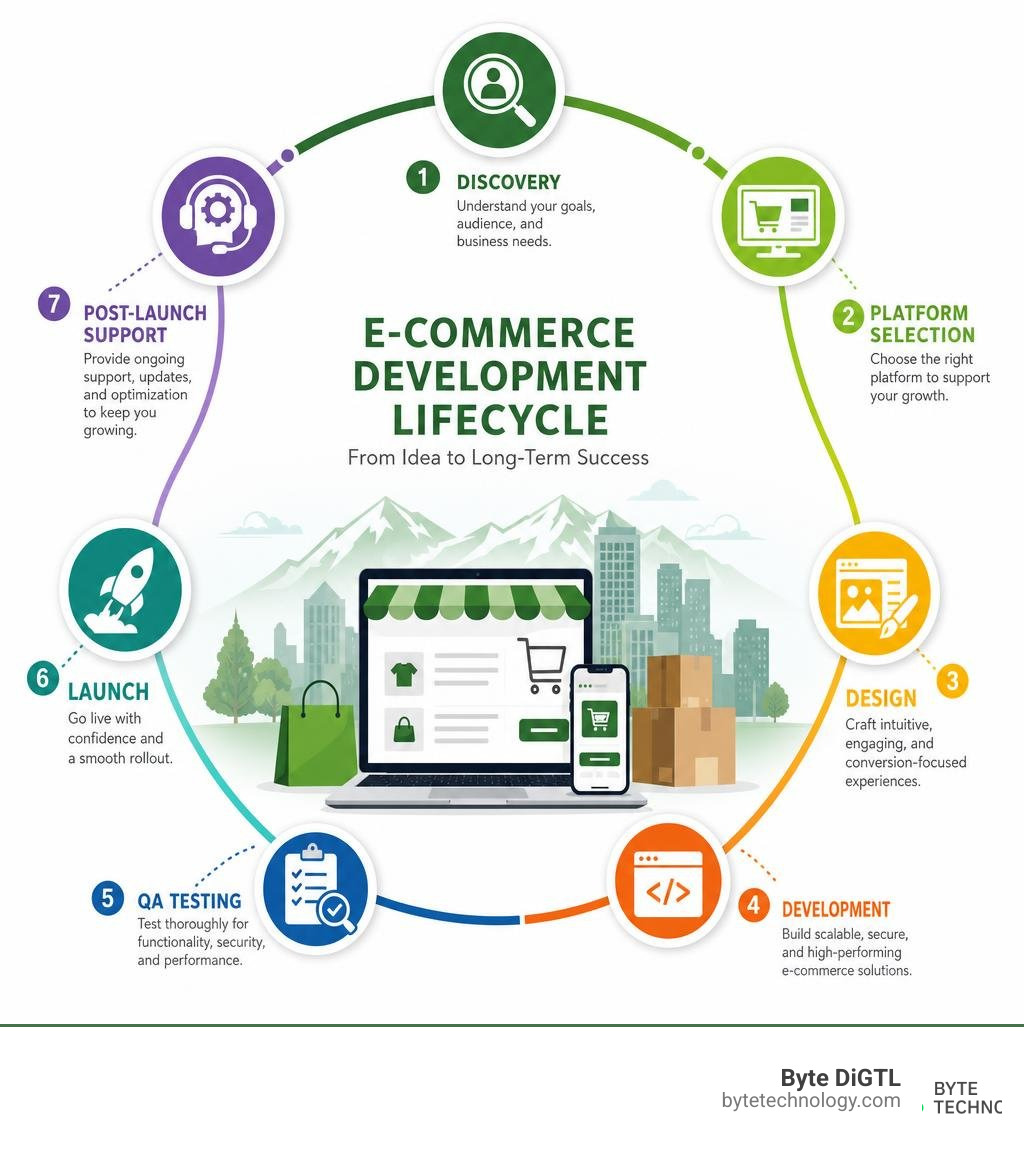
Your goal is to invest in custom e-commerce development in Denver that delivers a measurable return on investment. By partnering with specialists who understand e-commerce development inside and out, you ensure your platform is built to scale. For a deeper look at what goes into building a high-performing store, check out our guide on e-commerce website development what you need to know.
Key Services Offered by a Denver E-Commerce Development Agency
A full-service e-commerce partner does far more than write code. To build a successful online store, an agency must provide a comprehensive suite of services that address both the front-end user experience and the back-end operational infrastructure.
Here are the core services you should expect:
- User Interface and User Experience (UI/UX) Design: Crafting intuitive, conversion-focused layouts that guide users seamlessly from the homepage to the checkout screen. This includes optimizing menu structures, product filtering, and cart drawers.
- Custom Feature Development: Building unique tools tailored to your business model, such as interactive product builders, rental calendars, deposit flows, or custom subscription portals.
- System Integrations: Connecting your online store to the vital business tools you use daily, including Enterprise Resource Planning (ERP) systems, Customer Relationship Management (CRM) platforms, inventory management software, and email marketing suites.
- Secure Payment Gateway Integration: Setting up reliable payment processors like Shopify Payments, PayPal, Apple Pay, and Google Pay. For specialized industries, this also includes configuring high-risk payment gateways.
- Complex Sales Tax Configuration: Setting up automated destination-based tax collection to comply with local, state, and municipal regulations.
By combining these services, an agency ensures that your digital storefront is not only visually stunning but also operationally efficient. If you want to explore the entire process from start to finish, read our a-z guide to e-commerce website development.
How a Denver E-Commerce Development Agency Optimizes for Mobile and Speed
With over 60% of online purchases occurring on mobile devices, mobile optimization is no longer an optional feature, it is the foundation of modern web design. Colorado consumers are constantly on the move, shopping while riding the light rail in Denver, commuting along the Front Range, or relaxing in mountain towns. If your website takes more than three seconds to load on a mobile connection, you are actively driving customers directly to your competitors.
Fast websites can increase conversion rates by up to two times. To achieve these speeds, professional developers focus heavily on Google’s Core Web Vitals, which are performance metrics that directly impact your search engine rankings.
We optimize site speed through several technical strategies:
- Image Compression and Next-Gen Formats: Converting heavy product images to modern formats like WebP or AVIF, and implementing lazy loading so images only load as the user scrolls.
- Code Optimization: Minifying JavaScript and CSS files, eliminating render-blocking resources, and ensuring clean, production-ready code.
- Content Delivery Networks (CDNs): Utilizing global CDNs to cache your website’s static assets on servers closest to your customers, reducing physical latency.
- Server-Side Rendering: Utilizing advanced development frameworks to pre-render pages on the server, resulting in near-instantaneous load times.
By prioritizing mobile responsiveness and speed, you create a frictionless shopping experience that keeps users engaged. To learn more about maximizing your site’s performance, explore our detailed guide on how to optimize your e-commerce site for success.
Platform Selection: Shopify, WooCommerce, Magento, and Custom Builds
Choosing the right e-commerce platform is like pouring the foundation for a physical building. The platform you select will dictate your store’s scalability, maintenance costs, and operational flexibility for years to come.

Shopify has become the dominant platform for direct-to-consumer brands due to its ease of use, reliable cloud hosting, and robust ecosystem. For larger enterprises, Shopify Plus offers advanced customization, automated workflows, and dedicated merchant support. Because of its incredible stability and rapid deployment capabilities, Shopify e-commerce development is highly favored by fast-growing Colorado brands.
To get the most out of this platform, it helps to implement 10 smart strategies for Shopify e-commerce development. The platform is so powerful and scalable that many developers believe focusing on why Shopify e-commerce development is actually a genius career move due to the massive, ongoing demand for certified Shopify experts.
For businesses that require absolute control over their hosting, database structure, and source code, WooCommerce provides an open-source alternative built on WordPress. WooCommerce is highly flexible and cost-effective, making it ideal for brands that already run their main websites on WordPress and want to integrate e-commerce smoothly.
Magento, now known as Adobe Commerce, remains the platform of choice for massive enterprises with complex B2B requirements, multi-store setups, and heavy inventory catalogs. While Magento offers unmatched scalability, it requires significant development resources and high hosting costs to run efficiently.
Finally, for brands seeking the absolute pinnacle of performance and design freedom, headless commerce separates the front-end presentation layer from the back-end e-commerce engine. By building a custom front-end using Next.js and connecting it to a headless back-end via APIs, developers can create lightning-fast storefronts that load up to three times faster than traditional themes.
Custom vs Template-Based E-Commerce Websites
When launching an online store, businesses face a critical choice: build a custom website or use a pre-designed template. While template-based sites are cheaper upfront and can be launched quickly, they come with significant long-term limitations. Templates are built to appeal to the widest possible audience, meaning they are often bloated with unnecessary code that slows down your load times and hurts your SEO.
Custom e-commerce websites, on the other hand, are engineered from the ground up to match your unique brand identity and operational workflows.
Here is how the two approaches compare:
- Design Freedom: Templates force your brand content into pre-existing boxes, leading to a generic look. Custom design allows you to create a completely unique aesthetic that builds trust and sets you apart from competitors.
- Performance and Speed: Custom sites only contain the clean, lightweight code required for your specific features, resulting in much faster load times than bloated templates.
- Scalability: As your business grows, templates often break when you try to integrate new third-party apps or custom features. Custom sites are built with long-term scalability in mind, making it easy to expand your platform.
- Conversion Rate Optimization: Custom development allows you to design a tailored checkout flow based on real user behavior, helping you maximize sales.
Investing in a custom build is a strategic decision that pays off in higher conversion rates, better search visibility, and lower long-term maintenance costs. For a broader look at what drives digital growth, check out our article on 6 things to consider for e-commerce success.
The Role of SEO in E-Commerce Development
Building a beautiful, fast online store is pointless if your target customers cannot find it. This is where search engine optimization, or SEO, becomes critical. Many businesses treat SEO as an afterthought, attempting to optimize their site months after it has launched. In reality, SEO must be baked directly into the architecture of your website during the development phase.
An SEO-friendly e-commerce build includes:
- Semantic HTML and Site Structure: Organizing your website’s hierarchy with clear category pages, subcategories, and product pages that search engines can easily crawl and index.
- Structured Data and Schema Markup: Implementing JSON-LD schema for products, reviews, local business details, and FAQs. This helps search engines understand your pricing, stock status, and ratings, allowing your site to appear as rich snippets in search results.
- Clean URL Structures: Creating human-readable, keyword-rich URLs that clearly describe the page content.
- AI and Voice Search Optimization: Structuring product content to align with natural language queries used in voice search and modern AI-driven search engines.
By integrating these elements from day one, you establish a strong organic foundation that drives high-intent traffic to your store without relying solely on paid ads. To truly understand why organic visibility is so vital, read about the real value of e-commerce SEO and why your shop needs it now. You can also jumpstart your strategy with these practical 3 e-commerce SEO tips for 2023.
Frequently Asked Questions About E-Commerce Development in Colorado
To help you navigate your options, we have compiled a comparison of the primary e-commerce platforms used by businesses in Denver and across the Front Range:
| Feature | Shopify / Shopify Plus | WooCommerce | Magento (Adobe Commerce) | Custom / Headless |
|---|---|---|---|---|
| Best Suited For | Fast-growing DTC & Retail brands | WordPress users, content-heavy sites | Enterprise B2B & massive catalogs | High-performance, custom design brands |
| Hosting | Fully managed cloud hosting | Self-hosted (you choose provider) | Self-hosted or cloud managed | Serverless / Static cloud hosting |
| Development Complexity | Low to Medium | Medium | Very High | High |
| Average Build Time | 4 to 8 weeks | 6 to 10 weeks | 12 to 24 weeks | 10 to 16 weeks |
| Customization Limits | Some theme & checkout limits | Virtually unlimited | Unlimited | Absolute freedom |
What are the main types of e-commerce websites built by Denver agencies?
Denver agencies build a wide variety of e-commerce platforms tailored to different business models. The most common include:
- Business-to-Consumer (B2C) Storefronts: Traditional online retail stores designed to sell physical products directly to individual shoppers.
- Business-to-Business (B2B) Portals: Specialized wholesale platforms featuring password-protected customer portals, tiered pricing, bulk ordering sheets, and net-terms invoicing.
- Subscription Commerce: Platforms designed for recurring billing, subscription boxes, and membership access, featuring customer portals where users can easily pause or modify their orders.
- Multi-Vendor Marketplaces: Complex platforms where multiple independent sellers can list products, manage their own shipping, and receive automated payouts.
For B2C and subscription brands, maximizing average order value is a primary goal. Implementing strategic product bundles is one of the most effective ways to encourage customers to spend more per transaction. To learn how to execute this successfully on your site, read our guide on the power of product bundling for e-commerce sales.
How do Denver agencies handle complex Colorado sales tax configurations?
Colorado has one of the most notoriously complex municipal sales tax structures in the entire United States. Unlike states with simple, centralized tax rates, Colorado is a home-rule state, meaning individual cities can establish and collect their own local sales taxes.
For an e-commerce business operating in Denver, you must collect destination-based sales tax, which is calculated based on the buyer’s exact delivery address rather than your business location.
A standard Denver transaction can include up to eight separate tax components, totaling 8.81%:
- Colorado State Tax: 2.9%
- Denver City Tax: 4.31%
- Regional Transportation District (RTD): 1.0%
- Scientific & Cultural Facilities District (SCFD): 0.25%
- Cultural Facilities District: 0.1%
- Football Stadium District: 0.1%
- Denver Broadcasting Tax: 0.1%
Because of this hyper-local tax structure, manually calculating and filing sales tax is virtually impossible. Professional Denver agencies configure automated tax software, such as Avalara AvaTax or TaxJar, directly into your e-commerce checkout. These integrations automatically calculate the precise tax down to the specific street address, ensuring your business remains fully compliant with state and municipal regulations.
What post-launch support and maintenance options are available?
Launching your e-commerce website is not the finish line, it is the beginning of your digital growth journey. To ensure long-term success, your website requires continuous monitoring, security updates, and performance optimization.
Most professional agencies offer structured post-launch support packages that include:
- Security Patching and Software Updates: Keeping your platform, plugins, and payment gateways updated to protect against vulnerabilities and maintain PCI-DSS compliance.
- Performance and Speed Monitoring: Regularly checking your Core Web Vitals and load times to ensure third-party apps are not slowing down your site.
- Comprehensive Client Training: Providing detailed walkthroughs on how to manage products, process orders, edit content, and track analytics independently.
- Conversion Rate Optimization (CRO): Using heatmaps, user session recordings, and A/B testing to identify friction points in your checkout funnel and make data-driven improvements.
Ongoing optimization is the key to maintaining a highly profitable online store. If you are looking for actionable ways to boost your bottom line, explore these 8 simple ways to maximize your online store revenue.
Conclusion
Building a high-converting, scalable e-commerce store requires a strategic partnership with a team that understands both advanced software engineering and the unique dynamics of the Colorado market. From navigating Denver’s complex municipal sales tax rules to optimizing your site for mobile shoppers commuting along the Front Range, the right agency will ensure your business is built for long-term growth.
At BYTE DiGTL, we specialize in creating custom, high-performance e-commerce platforms that drive organic traffic, engage customers, and maximize conversions. Whether you are migrating from a legacy platform to a modern headless setup or launching a brand-new direct-to-consumer store, we provide the technical expertise and local market knowledge you need to succeed.
Ready to elevate your online store? Partner with a dedicated Byte DiGTL web design agency Denver team. Explore our tailored solutions across our service locations Denver CO and discover how we support brands near the DTC Denver Tech Center e-commerce services hub. Let’s build an exceptional digital experience together.